

Group at Eleven
A mental illness observed

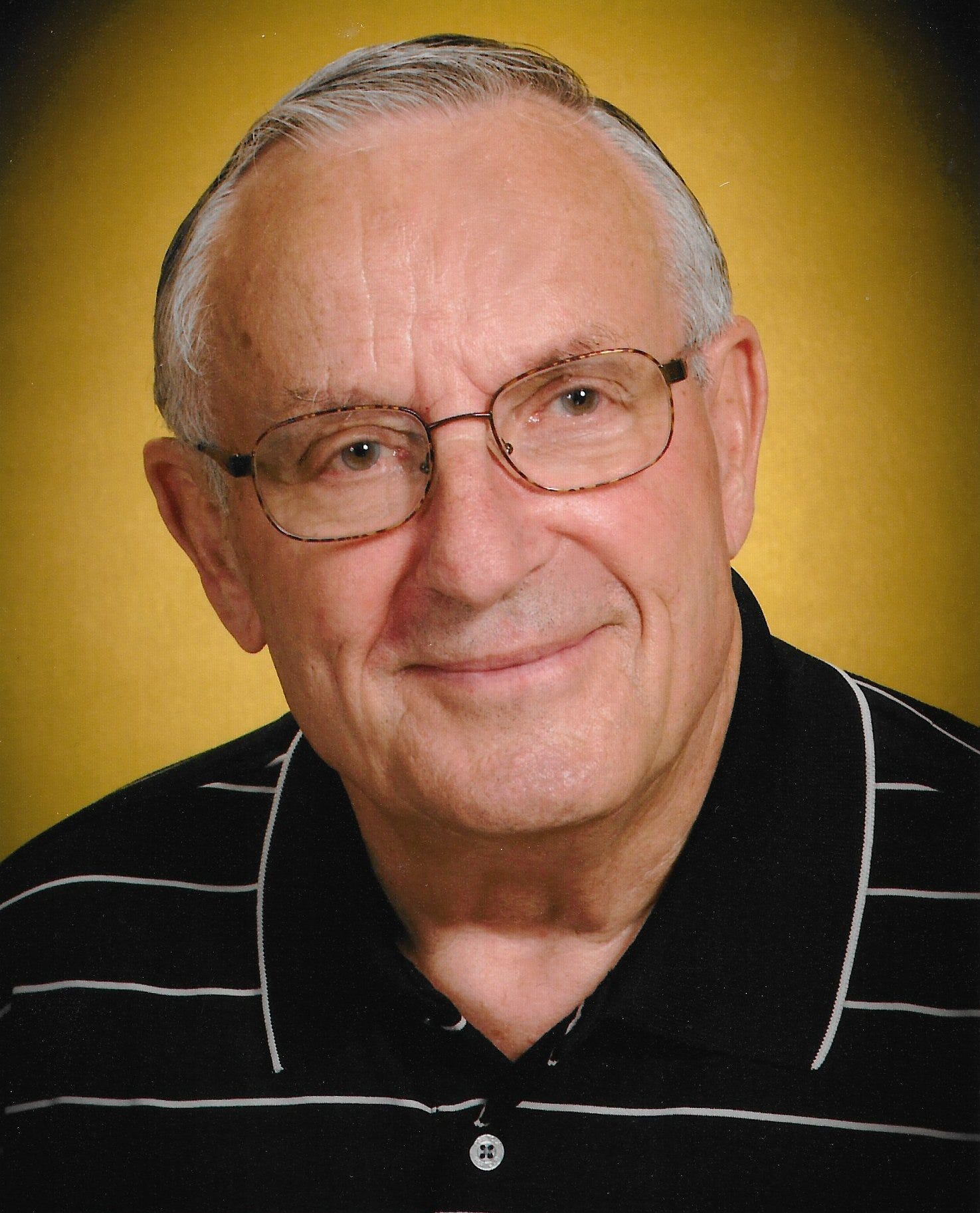
My personal history writing career was gaining traction in 2004 when I met with Linda, the sister of our church’s pastor. Linda and her husband had come to Rochester to present a session on living with grief and sadness. We met to explore the possibility of my helping her write a heart-breaking memoir. On March 22, 1992, in a small midwestern town, her father-in-law—a business owner and highly respected man—put a shotgun to the heads of his sleeping family members, killing his wife, their two children, and their two grandchildren, and then shot himself. The local newspaper headline shouted: Three generations of family fall to father’s shotgun blasts. Linda’s only child, Brett age 8, was one of the grandchildren murdered. Authorities suspected depression as the cause.
I have never met with someone who had experienced such tragedy. She told her story, tearfully, as I listened in horror at the details. My wife, Jeanine, and I shared with Linda the sadness of losing a child (our younger son died suddenly on March 21, 1985), but her sadness ran so much deeper.
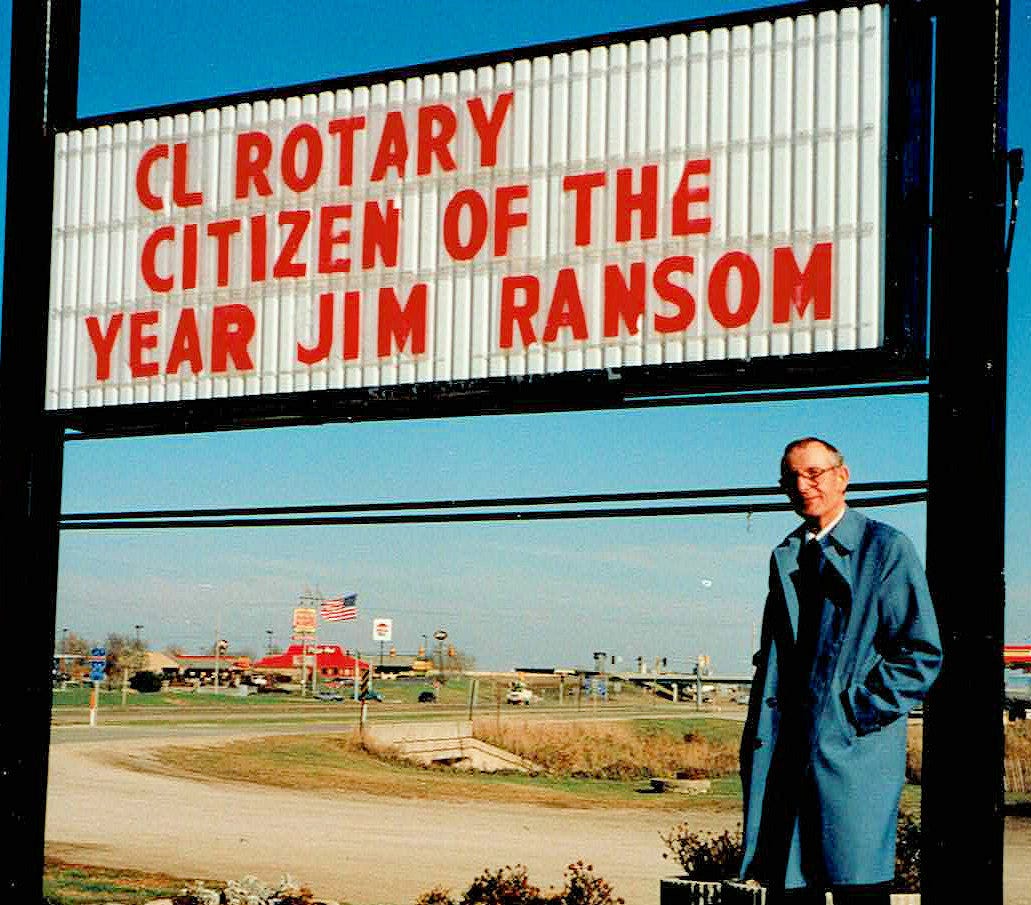
What frightened me then, and even today, is I will never know how close my own father, Jim Ransom, came to doing something similar. He, too, was a highly respected man in his small, midwestern town, active in his community and church, and named Citizen of the Year in 1995. He was kind, humble, hardworking, the best father a son could have. He, too, was afflicted with depression.
So much that happens in our lives hinges on the times when we are born. Dad came into the world on February 6, 1923. He turned 18 two months after Pearl Harbor was bombed, was drafted into the Army, and his service included combat duty on Okinawa. When discharged, he signed up for the Army Reserves, mainly because it provided some extra income. When the Korean War began, some in the reserves were called into action. He left for nine months of combat duty in Korea when I was two years old, and I can’t imagine how I would have felt doing the same. These back-to-back war experiences may have planted seeds of depression that haunted him the rest of his life.
1970
The first time the disease reared its ugly head was in 1970. Dad was 47, and I was in my senior year of college. Mental illness was not “respectable,” so Dad was whisked away to the psychiatric unit of Mercy Hospital in Mason City, Iowa, and Mom encouraged my sister, Sue, and me not to tell where he was or why he went away. My best friend had disappeared, and I wondered if I would ever see him again. One source of comfort was that Dad and I had become friends with his attending psychiatrist, Dr. Robert Powell, through playing with him on the Mason City YMCA volleyball team. After a long, two weeks of multiple electroconvulsive therapy (ECT) procedures, medication, and rest, the dad we knew and loved was back home.
Working with Dad (farmwork, painting, lawn mowing) and playing sports with him (volleyball, racquetball, table tennis, and more) had drawn us close. He didn’t demand respect; he earned it through his actions. He and I talked easily on many subjects, but after his hospitalization, depression was one we never discussed. I lived holding my breath worried that his demons would return.
1989
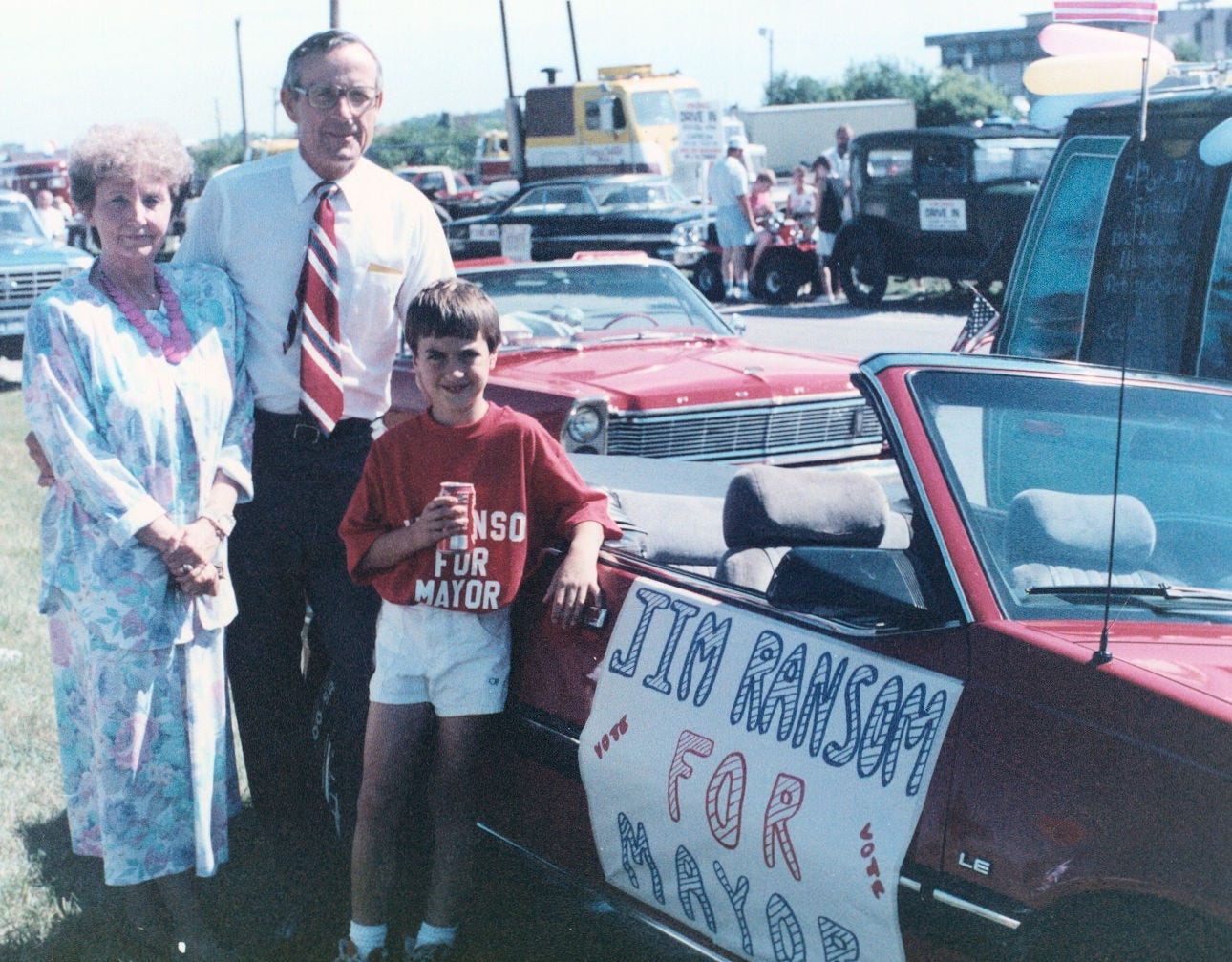
Dad represented his neighborhood’s ward on the Clear Lake City Council for several years. He was a natural leader, and he had a masterful way of disagreeing with people while maintaining friendships with them. He frequently cast a vote in the minority, for or against something, not worried about what people would think but always voting his conscience. In early 1989, Dad announced that he would run for city mayor in the fall. He was the perfect candidate and the favorite to win. In the town’s Fourth of July parade, Dad and Mom rode in a convertible sporting a banner JIM RANSOM FOR MAYOR. Jeanine, Ben (nine at the time), my sister, Sue and her husband, Dan, and I walked along their car handing out pens with that inscription. The future looked so bright.
On August 21, Mom helped a stressed-out Dad check in to Mercy Hospital. After three weeks in the psychiatric ward and four ECT procedures, he returned home. Dad phoned me about a week later to say he had decided not to run for mayor. He seemed distant and matter of fact. “No problem, I’ll be fine” he told me, but not convincingly. He said he had talked out everything he wanted with his doctors. It was a discouraging call. A week later we talked again. He had a lot of pep in his voice and sounded like his old self. He said, “I want to forget that these last few weeks ever happened.”
I believe the town would have loved Dad as mayor. He must have been crushed by the turn of events, but he never bemoaned his fate, and this topic was added to the few we never talked about.
1991 & 1994
On a dark, cold March evening in 1991, Dad needed help. Mom called near midnight to say that he had spent several sleepless nights unable to concentrate and he was afraid that he would hurt himself. Could I come right away and take him to Mayo Clinic in Rochester? I could, of course. I wasn’t sure how Dad would handle the ride, so I called his brother, Ross, and asked if he might follow us. I never admitted this to Dad, and I am forever grateful to Ross for doing it. As we began the trip, I asked, “Would it help if we talked? Or would you rather not?” He replied, “I’d rather we not,” and we drove the 90 miles in darkened silence, the longest ride of my life. I kept wondering what was going through his mind and hoping he would stay calm.
Generose is the name of Mayo Clinic’s psychiatric ward. There they work miracles and bring hope to patients and families. When I visit Dad, I press the buzzer to get into the ward, sign my name on the guest sheet, and a nurse tells him he has a visitor. He sits quietly in his room wearing a hospital robe over pajamas. His room is quiet, comfortable, and sterile. It has nothing that requires a cord (TV, radio, table lamp, or window blinds). He needs few clothes (and cannot have a belt), so the closet is nearly empty. His razor has been removed from his shaving kit. Given his state of mind and the effects of the ECT procedures, our conversations are difficult, halting.
“Good to see you, Dad. How are you doing?”
“Oh, OK I guess.” Followed by a long pause and a distant gaze.
“And the food?” (Dad loves to eat…more than any person I have ever known.)
“I’m not very hungry.” Followed by another long pause.
Other than rest, ECT procedures, doctors’ visits, and meals, group therapy and crafts are about the only two activities on his daily calendar. “When do you have group today?”
“At eleven, I think.” Followed by yet another long pause.
I should know not to ask questions that can have such terse answers, but I am not sure he can handle a “tell me about your day” request. I have learned that my quiet presence may be my best gift to him, so we sit side-by-side, father and son. Time moves slowly for me; I can only imagine how it moves for him. After a while, I say I’d better be on my way. “Tell Jeanine and Ben ‘hi’ for me,” he says. I give him a hug, say, “I love you, Dad,” and leave thinking He is such a good man, why this?
This stay is a rough one for Dad. He has been diagnosed as manic-depressive, but for previous hospitalizations, he has displayed mainly depression and quiet rather than mania and paranoia. So, I am caught off guard one visit when he pulls me aside, looks angrily in my eyes, and snarls like I have never heard him before, “Mike, listen to me and listen to me hard. I want you to go home right now, sell the house, and bring the money back to me. You hear me? I need you to listen to me.” How does one respond to such a demand? Though I had no intention of following that order, this did not seem the right time to cross him.
Three years later, Dad is back in Generose for more ECT procedures. This visit is memorable because of a visit with Dad’s psychiatrist. My cousin, Randy, and his family were visiting from their home in West Virginia. Randy and I had a nice talk with Dad, and on our way out we spent a few minutes with his psychiatrist. He was reassuring that Dad would get better, but he added, “None of us are sure just how close Jim has come to harming himself.” The possibility was not news to me. But then he continued, “And we are not sure how close he has come to harming others.” Hearing that sent chills through me. Dad would never do that, would he?
1997
Mom and Dad’s fiftieth wedding anniversary would be August 27, 1997. Rather than plan for that celebration, we planned a funeral. At the beginning of the year, Mom’s skin began to turn yellow. Something was wrong, but she refused to see a doctor. I think she knew if she left her home that she would never return, and she was right. She died two weeks before what should have been her anniversary party. After her funeral, I remember standing by Dad outside Clear Lake’s small airport as we watched the airplane carrying mom’s sister take off. Dad closed his eyes and leaned his head on his forearm against a chain link fence as sadness overwhelmed him. We watched and worried for Dad, but he assured us that he would be all right, and two weeks later I received one of the most frightening phones calls in my life. Sue was calling from her home in Arizona. She said, “I just got off the phone with Dad. I am afraid he may kill himself.” She said they were visiting and when Dad stopped suddenly, she became frantic. So, she is in Arizona, Dad is alone at his home in Iowa, and I am in Minnesota. I phoned the Clear Lake police who arrived in short order, and Dad was soon in an ambulance on his way to the psychiatric care unit at Mayo Clinic. What we had feared had come true. Mom had just died, and now Dad had crashed again. This would be his fifth time through treatment. I thought, how many times can the magic work?
When I arrive at Generose for a visit, rather than being taken to the sterile room he usually has, I am escorted to a separate wing. When the aide opens the door, I see Dad sitting on a mattress on the floor in solitary confinement. The room has nothing in it other than the mattress. He looks like a caged animal, and I will never forget the sadness for him that overwhelmed me. He is eating his lunch from a plate on an aluminum tray. He likely had a spoon but no fork or knife. I know he had a white napkin, because as soon as I sat beside him, he grabbed it, went to the small head-high window in the room, and began waving it frantically, trying to get someone on the street to see his call of distress and come up to free him from his prison. “I have to get out of here,” he tells me.
1998
In 1998, on the year anniversary of Mom’s death, Sue, Jeanine, and I invited Dad to come along with us, Ben, and his friend to a Camp Jeep Jamboree in Vail, Colorado. Thousands of Jeep owners flocked to the multi-day event for entertainment, Jeep off-road rides, and more. We thought that getting away would be good for him. Joan Benson was employed by the event-planning company and worked at one of the booths. She greeted us as we passed by, and when she glanced up at Dad (tall and good looking), I noticed something in her eyes that said, I think this guy is special. As he and I moved on, Joan took me aside to say, “I’ve never been this forward, but could I ask, ‘Is your dad married?’” I said he wasn’t and that it was ironic she would ask, given the reason for our trip. “Do you think he would mind if I asked him to join me for a cocktail this evening?” I told her I was sure he would be pleased with her invitation.
Joan lived in Eden Prairie, MN, and traveled to events around the United States. She was born and raised in England, had moved to the United States and married, and later divorced to escape an unhappy marriage. She and Dad hit it off immediately, began seeing one another regularly, and fell in love. Three years after their meeting, Joan was dying from gastric cancer with Dad by her side in the hospital, just as he had been when Mom died of cancer. During one visit, he mentioned in passing that he had stopped taking his anti-depressant medication, and red flags waved. Joan passed away in July, and within weeks, Dad was admitted to the Mercy Hospital psychiatric ward.
I remember my first visit the day Dad was admitted. He lay on his bed (the far one) in a darkened room. On the near bed lay his roommate, a large man, on his back with his big belly protruding. He wore farmer bib coveralls, but was shirtless, so his white stomach blubber was visible to all. As I was about to knock and enter, I heard Dad’s voice from his side of the room, “Mike, don’t come in.” I didn’t.
2014
My sister, Sue, treated our parents royally. After Mom died, one of her kindnesses was to invite Dad to spend several weeks with her each winter at her home in Sedona, Arizona. Another was to buy Dad a home on Clear Lake where he could spend his twilight years. As Dad turned 90 in 2013, Sue moved to Clear Lake, just in time to help him sell his house and move into a nearby nursing home. What a great help she was. Not long after Dad moved in, the nursing home staff discontinued one of his anti-depressant medications (They told us later they were concerned about its long-term side effects. Really?) Dad began acting strangely. He shouted at his next-door neighbor for playing music too loudly, said the man threatened to kill him, and after, he was afraid to pass his door. When things worsened, Sue took Dad to the Mercy Hospital Emergency Room where I received a call from her.
“Mike!”
“Sue? What are those voices and sirens in the background?”
“I’m at the emergency room with Dad. There’s a tornado warning …one is headed our way, and loudspeaker announcements are telling us all to head to the shelters. But Dad refuses to go.”
“What?”
“That’s right.”
“Let me talk to him.” I did but failed to convince him to follow directions, so I suggested to Sue that she head to the shelter and leave Dad in his wheelchair in a restroom.
Dad was admitted to the hospital psychiatric ward and began treatment. He called from his room one day to say, “Mike, I hardly ever ask for a favor from you, but you have to come and get me out of here as soon as you can. I am more afraid here than I ever was in the service on Okinawa or in Korea. I cannot trust anyone here.” I was able to calm him and assure him that not everybody there was out to get him. We went through many names, and we finally landed on one person he thought might be OK. Sometimes, one is all you need. So, when we hung up, I felt he had something to focus on to calm him down.
Sue and I attended a conference with his doctors. I remember his lead psychiatrist saying, “I think we are doing Jim more harm here than good. It’s time he returned to the nursing home.”
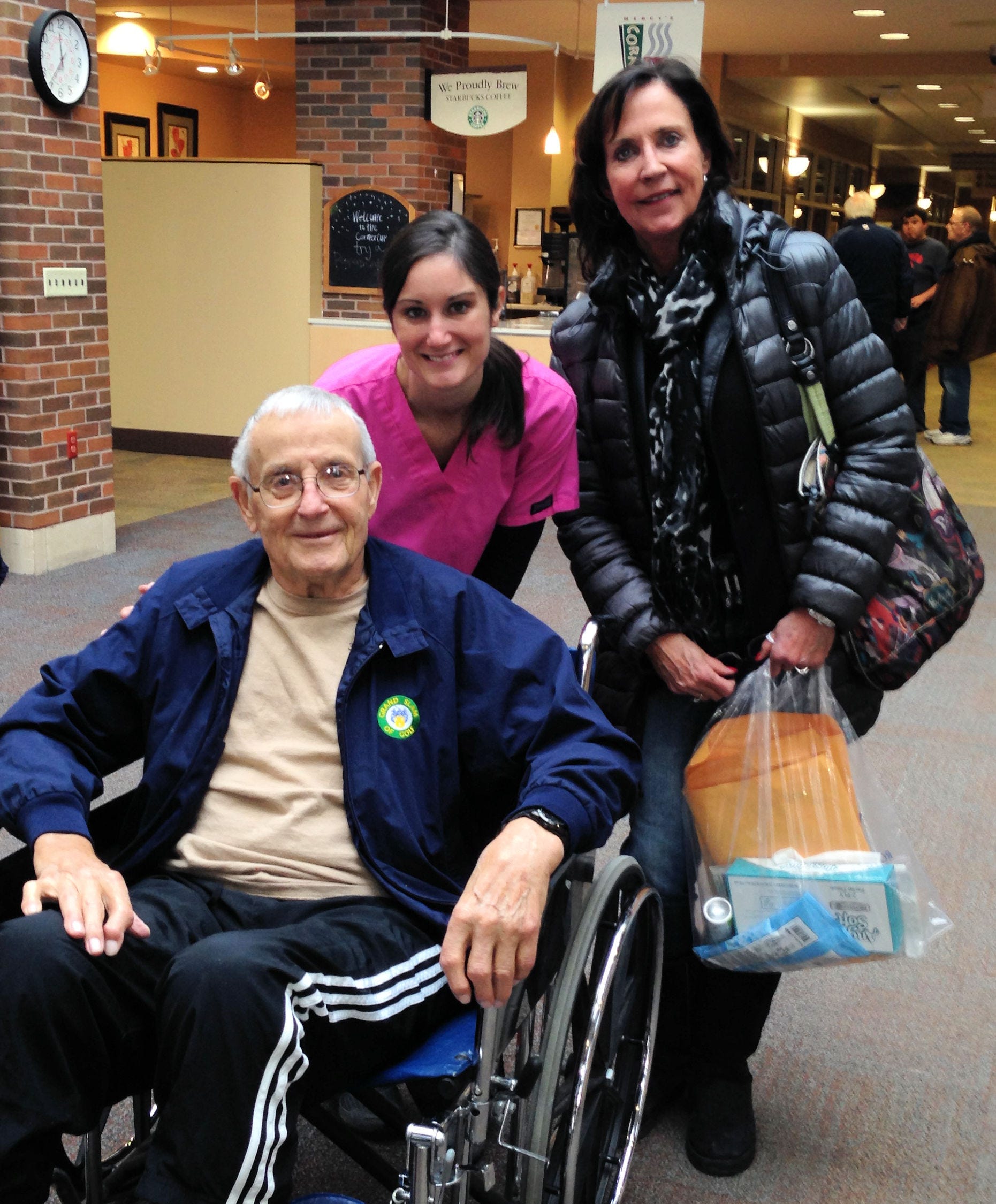
He lived about a year after that. A few weeks before he died, when we could see the inevitable on its way, I visited him in his room and read him the eulogy I would give at his service. It was less than 10 minutes, but when I finished, he said, “That was nice, but it’s a little long, isn’t it?” That was Dad, never wanting much attention or credit.
Dad sat on the side of his bed as we visited. When it came time for me to go, he said, “Mike, I will never be able to thank you enough for all you have done for me. You saved my life many times.” We hugged, I said, “Thank you, Dad, I love you,” and I left with tear-filled eyes thinking how fortunate I was to be his son.
Even though Dad died 10 years ago, I hesitated writing this post because it shows him at such vulnerable points in his life. He, however, always thought of how he could help others and spent so little time focusing on himself, so if what I share can encourage those dealing with mental illness, I am sure he would approve. I do not have answers, but please, do not harshly judge the mentally ill, be persistent in seeking help, and don’t ever give up.
Judy - you are such a loyal reader of my writings. I will always appreciate it. (And I thank you for your paid subscription!) I am pleased you feel that Dad would be proud. I think there's more empathy toward those with mental illnesses and their families today than years ago, but there's still a ways to go. I was hoping my post could help with that.
Mike, I know how much you love your dad, but I had no idea the extent he and you went through all of this.
I wonder how his care/treatment would differ today compared to back then. Could they reduce the number of major episodes or stop them with advanced treatment and therapy after the 1st episode?
Hopefully, you found writing this story personally therapeutic, considering how your dad’s mental health affected you as his caregiver. Bless you for being there for him no matter how he needed you in those critical moments.